The hazards in this environment
Every industry has a characteristic risk profile, and monitoring is only useful when it is aimed at that profile rather than at a generic list.
- Fuel and shielding gas leaks - Acetylene and LPG are flammable; argon and CO2 are asphyxiants that displace air in low or enclosed spaces without any warning property.
- Hot work fire - Sparks and slag travel further than people expect and smoulder in stored material. The classic fabrication-shop fire starts during work and is discovered after everyone has gone home.
- Welding fume - Metallic fume and, depending on the process and coating, more specific toxics. A chronic exposure hazard managed by extraction.
- Cylinder storage - Concentrated stored energy, frequently in a corner nobody monitors.
What to monitor
Which channels matter, and in roughly this order of usefulness for this industry.
- Combustible gas, on two channels with different response profiles, for acetylene and LPG leaks - particularly in cylinder storage
- Smoke, with the most value outside working hours when the background is low
- Temperature, for smouldering material after hot work has finished
- Flame, handled carefully - see below
- Sound and vibration, which distinguish 'work is happening' from 'the shop is empty', and therefore make every other channel interpretable
Where the nodes go
Placement decides whether monitoring works. A node in the wrong place produces confident silence, which is worse than no node at all because it is trusted.
- Cylinder storage areas, which are usually the highest-consequence and least-watched space in the building
- Over material storage adjacent to hot-work bays, where sparks land and smoulder
- In enclosed or low areas where argon or CO2 could accumulate
- Away from direct line of sight of welding bays, to keep the flame channel useful
What prediction adds here
The most valuable pattern in a fabrication shop is temporal rather than numerical: a smoke or temperature signal rising in an area where the sound and vibration channels say no work is happening. That combination - combustion without activity - is the after-hours fire, and it is detectable precisely because the node sees the activity channels and the hazard channels together.
What Alfa HazardX covers today
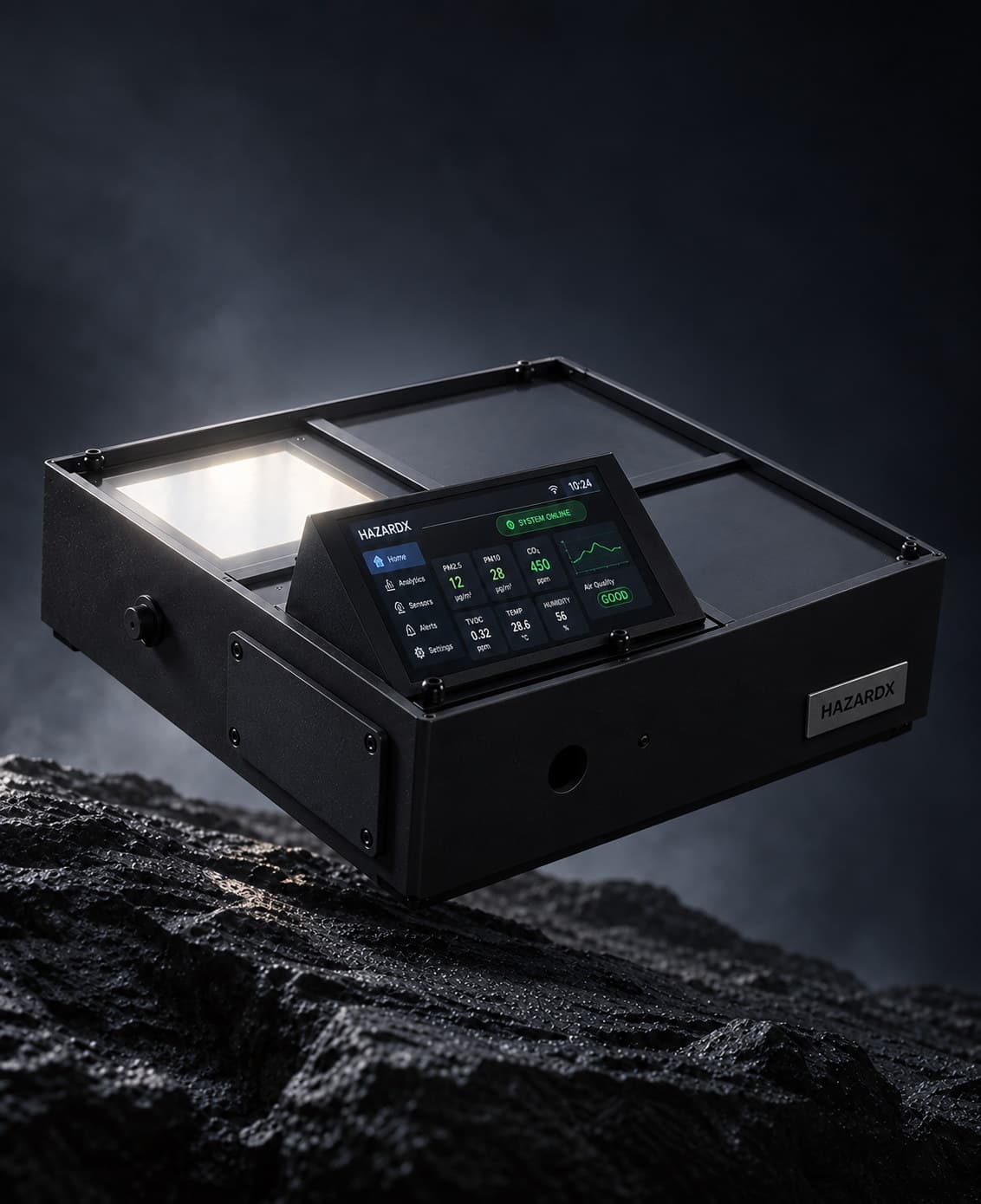
Alfa HazardX carries combustible gas, smoke, temperature, flame, sound and vibration on one node, which is what makes the activity-versus-hazard distinction possible. Local alarm operates independently of the network, which matters in a building that is empty overnight.