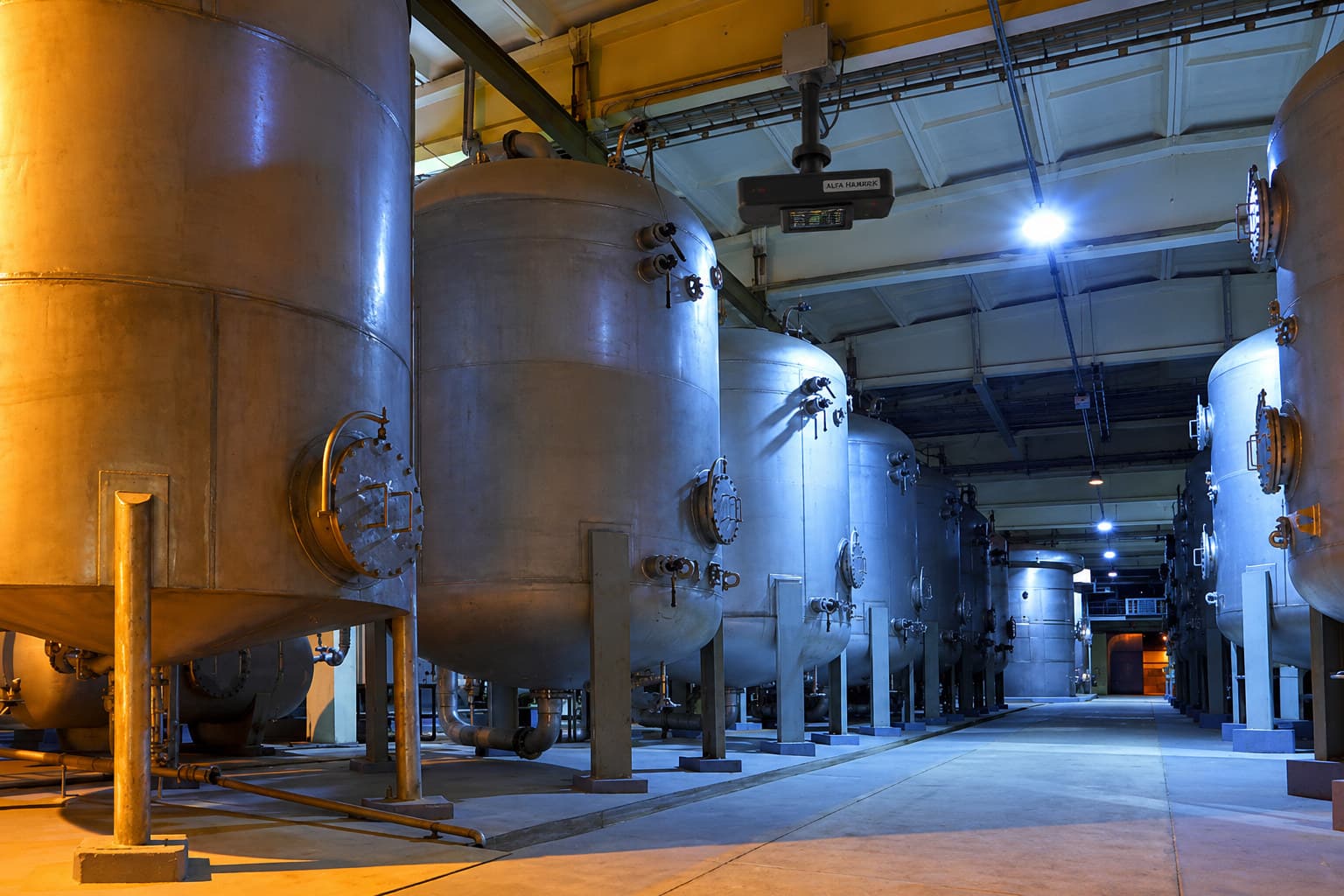
Compliance and monitoring are not the same thing
Most factories are inspected, not monitored. An inspection is a sample: a person with an instrument, in one place, on one day, under conditions that are usually better than average because everyone knew they were coming.
Monitoring is the other thing - a measurement that keeps happening when nobody is watching, including on the night shift, including during the changeover, including on the Sunday when the extraction fan tripped and nobody noticed until Monday.
Both are worth having and they answer different questions. An inspection tells you whether the plant met a standard at a moment. Monitoring tells you what actually happens across a year, which is the only thing that can tell you whether the standard was the right one.
What is worth measuring on a factory floor
The channels below are the ones that repay the cost of installing them in a general manufacturing environment. A specific process may add to this list; few processes can safely subtract from it.
- Combustible gas and vapour, wherever solvents, fuels or fine organic dust are handled.
- Carbon monoxide, wherever there is combustion, a forklift running indoors, or a furnace.
- Air quality and particulate load, which is both a health exposure and an early indicator of a process running out of specification.
- Surface and ambient temperature, particularly the difference between a machine and the air around it.
- Vibration on rotating plant, which is where most mechanical failure announces itself first.
- Acoustic level, mainly for what it says when it falls - a stopped fan is silent, and silence trips nothing.
Placement decides most of the outcome
A detector is only monitoring the air that reaches it. This sounds obvious and is routinely got wrong, because instruments get mounted where the cable run is convenient rather than where the hazard goes.
Gas has a density. Methane and hydrogen collect at the ceiling; LPG, petrol vapour and most solvents pool at floor level. A single detector at chest height, chosen as a compromise, is well placed for neither.
Airflow beats density. A working extraction system moves air on a schedule, and it will carry a release away from a detector that a density calculation said was correctly positioned. The honest way to place instruments in a ventilated space is to find out where the air actually goes, not to reason about it.
And coverage is not a radius. A wall, a stacked pallet or a machine guard between a release and a detector is a wall between the release and the detector.
Where this system fits
Alfa HazardX is one node carrying eleven sensing channels, which addresses the placement problem from a different direction: instead of a scatter of single-purpose detectors each needing its own correct position, one instrument covers a zone across several hazard types and is mounted once.
It also scores how the readings are moving rather than only how large they are. On a factory floor that distinction is the practical one, because absolute levels on a production line vary enormously with what is running - and a channel accelerating away from its own recent behaviour is informative regardless of where in its range it sits.
It is the V2 field node. What that means concretely is set out on the current status page, and it is worth reading before planning around it.